
Friday, September 21, 2018
Kendo and Karate Kata (Forms) as Self Seeing Robots
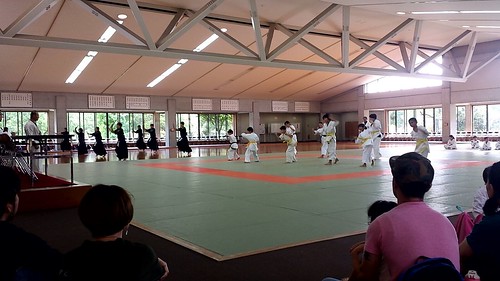
You practice the forms. Eventually they come naturally. Miyanaga claims that there is an intermediate or parallel ability to visualise the forms in her paper on robots.
The paper in English comments on the similarity between form mastering Japanese, and form mastering robots
Miyanaga, K. (1985). POPULARITY OF ROBOTS IN JAPAN── Tradition in Modernization──. 国際基督教大学学報. II-B, 社会科学ジャーナル, 24(1), 111-123.
icu.repo.nii.ac.jp/?action=repository_uri&item_id=366...
However in section 4, entitled "Image and Action," of her paper in Japanese Miyanaga (1987) explains how it is an ability to generate an integrate *image* of ones behaviour, through the practice of forms, that enables Japanese humans (but perhaps* not robots) to move from doing things by rote to doing things freely and naturally.
宮永國子. (1987). 日本のロボットと土着文化 (「ロボット・人間」). 社会心理学研究, 2(2), 7-13.
www.jstage.jst.go.jp/article/jssp/2/2/2_KJ00003724946/_pd...
This Miyanaga's assertion is at the centre of my understanding of Japanese culture and therefore the best Nihonjinron (other than my own!) that I know.
* There is work to create robots with autoscopy
https://www.researchgate.net/publication/326998491_The_Synthetic_Psychology_of_the_Self
Cyberdyne?
Labels: autoscopy, japanese culture, martial art, Nacalian, nacalianism, nihonbunka


Saturday, November 11, 2017
The Heart of Yamato
A Japanese comment on this "Group Behaviour" video claims that it is the sort of video to show people if you want them to understand the central characteristics of the Japanese in a short space of time.
Beneath the comment there are a few dissenters, and I am one of them since I think that there are also a lot of very individual Japanese such as the famed YouTube and international relations phenomenon, Pico Taro
And the scary-cute songstress Kyari Pamyu Pamyu
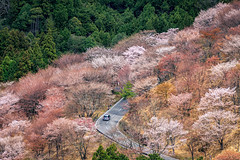
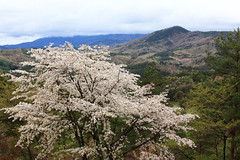
For my money, as I have claimed many times before, the third video hits the nail of the Japanese mind on the head, more than the group behaviour video above, or the proverb about "the nail that stands out," since the Japanese like both groups and individuals. Kyari, however, gives the game away half-way through the video when she bokes up eyeballs. Yes, the Japanese have internalised eyeballs (or a mirror) into (or as) their heart, that encourages them to above all, look really cool, or try to. Thus also, in the words of the Edo period philosopher, Norinaga Motoori, "If asked about the heart of the Yamato (Japanese), tell them to look at mountain cherry blossom tree(s)" (the original specifies neither singular nor plural), since the Japanese in all three videos, and mountain cherry blossom trees, en masse, or just one, look really cool.
Takemoto, T. R., & Brinthaupt, T. M. (2017). We Imagine Therefore We Think: The Modality of Self and Thought in Japan and America. 山口経済学雑誌 (Yamaguchi Journal of Economics, Business Administrations & Laws), 65(7・8), 1–29. Retrieved from nihonbunka.com/docs/Takemoto_Brinthaupt.pdf
Takemoto, T. R., & Brinthaupt, T. M. (2017). We Imagine Therefore We Think: The Modality of Self and Thought in Japan and America. 山口経済学雑誌 (Yamaguchi Journal of Economics, Business Administrations & Laws), 65(7・8), 1–29. Retrieved from nihonbunka.com/docs/Takemoto_Brinthaupt.pdf
Labels: japanese culture, mirror, Nacalian, nacalianism, nihobunka
Monday, February 29, 2016
62 Translations of Okonomi Yaki
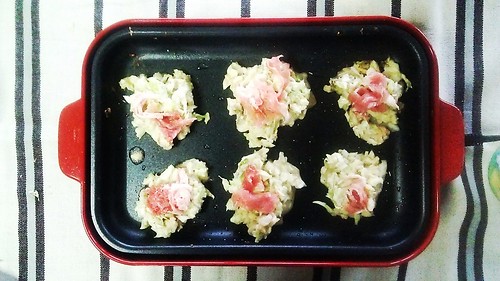
Fritters as you like them. Fritters to taste. Free fritters. Fritters freed. Japanese pan fried pizza. Savory pancakes. DIY fry-up. Griddled Goo. Individualistic johnnycakes. Selfish savories. Preference, predilection, prepossession, propensity, personalised or pet pancakes or paste. Pet preparation. Wished or whimsy waffles. What you will waffles. (Free)Will waffles. Flavour Flapjacks. Groove griddle cakes. Number one gunge, My cup of tea cakes. Croquette my way. Darling, dearest, desired, or druthers doughboys or dumplings. Liberty cakes. The cook is on holiday cakes. Be my batter cakes. Beloved batter cakes, Coagulated stir fry. Callous cutlets. Choice cabbage cakes. Liking or Love lump cakes. Main mush. Choice Concoction. My mix. Pan fried partiality. Pan-fried perfection. Caprice cakes. Hobby hotplate. Free-style fries. Fried fantasy. Freedom fries. My fry. Favourite fries. Hashed heaven. Hashed happiness.
My students always 'translate' the name for Japanese foods such as that pictured above (お好み焼き) using their phonetization, "okonomi yaki," which might just as well be kowwash firdight for all the meaning it would impart to the average anglophone. This is I think because people hate meaninglessness (Heine, Proulx, & Vohs, 2006) so if at least one word in Japanese is included in any sentence the sender knows that at least that one word will be meaningful in a Japanese context, and that their conversation partner will have some idea of what they are talking about. The reasons for this is anatta or no self. The self is just a representation (story or image): something with a meaning. The lack of meaning is self-annihilation, and English conversation practice almost deadly. I need to be nicer to my students, investigate Japanese hospice praxis, while insisting that students use non-phonetic translations.
Heine, S. J., Proulx, T., & Vohs, K. D. (2006). The meaning maintenance model: On the coherence of social motivations. Personality and Social Psychology Review, 10(2), 88-110.
www.google.co.jp/url?sa=t&rct=j&q=&esrc=s&...
Addendum Good Paper on Japanese hospice praxis emphasises the use of image-based measure (PAC analysis) rather than scales. Recommends, in addition to palliative care and listen: smiles and improved personal hygiene and health on the part of the carer. I try to always attend conversation class wearing a business shirt and tie.
對馬明美, Tsushima, A., 三上佳澄, Mikami, K., 西沢義子, & Nishizawa, Y. (2010). 死を意識している患者との対話場面における看護者の態度構造に関する研究. 日本看護研究学会雑誌, 33(5), 33-44. http://www.jsnr.jp/test/search/docs/103305003.pdf
内藤哲雄1997/2002PAC 分析実施法入門[改訂版]「個」を科学する新技法への招待ナカニシヤ出版 amazon link a student gave a presentation about this. I thought it came from outside of Japan.
内藤哲雄. (1997). PAC 分析の適用範囲と実施法. 信州大学人文学部人文科学論集< 人間情報学科編>, 31, 51-87.
https://soar-ir.repo.nii.ac.jp/index.php?action=pages_view_main&active_action=repository_action_common_download&item_id=707&item_no=1&attribute_id=65&file_no=1&page_id=13&block_id=45
Labels: els, english, englishconversation, nacalianism, nihobunka, self, 日本文化
Monday, November 02, 2015
What is Beauty to the Japanese
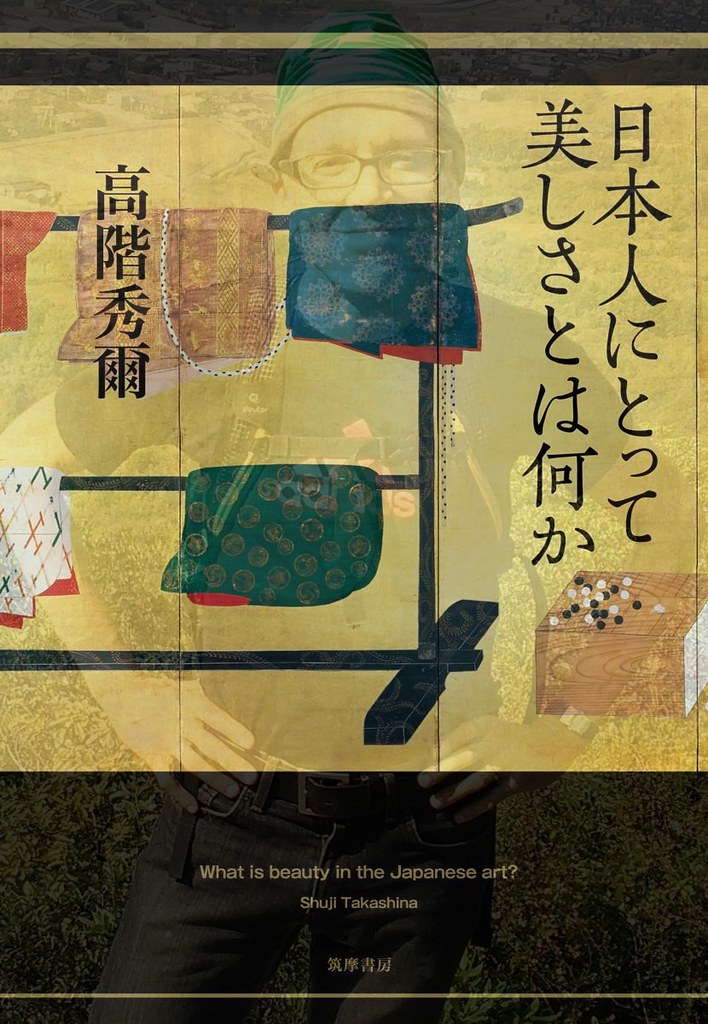
While I was engaging in narcissism, a real scholar was writing the theory that I never will: that beauty to the Japanese is quinessentially in the image, whereas Westerners need to talk about it. Yess! My lame excuse is that when I attempt to write about this topic it is like I am writing myself out. Maybe now that I am not quite invisible I will do better. I live in hope and have professor Takashina's book on order. It is a best seller already. The prime minister should read it, since he clearly does not know how beautiful Japan already is. http://flic.kr/p/AABj3t
Labels: blogger, Flickr, image, japaneseculture, lacan, nacalianism, nihonbunka, 日本文化
This blog represents the opinions of the author, Timothy Takemoto, and not the opinions of his employer.